
Build Customer Personas for Better Marketing

Solving the pain points for a potential client is a tremendous way to gain new customers and create loyal patrons. But how can a service provider solve the problem for a potential customer if they don’t know who their own customers are? Creating a customer persona is a necessary tool to better understand your average potential client, what pain points that person usually faces, and how you can solve their issues to turn that person into a paying customer.

What is a Customer Persona?

A customer persona is a creative model that showcases key traits, demographics, needs, and pain points of an average customer. For MSPs and other types of service providers, creating customer personas is not only an important tool for the growth of your business but also a tool for your clients and their growth.

How Do You Create a Customer Persona?

There’s one thing needed to create accurate and thorough customer personas – data. And you have plenty of it. Your CRM, POS system, website analytics, WiFi analytics, and social media pages are packed full of data that can be pulled to create realistic representations of your audience.

There are specific data sets you’ll want to outline before you start defining your ideal customer. Type of industry, job title, demographics and pain points are just a few data sets you’ll want to know about your audience. To get to what matters most to your typical client, you’ll need to research and understand behavioral data like purchase drivers, purchase barriers, motivations and communication preferences. Surveys, interviews, and market research are all helpful tools when defining personas.

Remember that personas are a broad representation, not one actual customer. It’s important to pull as much data as you can and then identify the patterns that will build your audience persona’s characteristics.

Data overload? It’s a real thing. Now it’s time to turn that data into action.

If you find you have access to a wide range of customer data points, don’t be afraid to create multiple personas. Most likely, your audience can’t be narrowed down to a single fictional representation. Depending on your business type, you could have anywhere from 3 to 20 customer personas. The point of customer personas is to offer a super granular view into your ideal customers – make sure no potential customer type goes unnoticed.

Customer Personas for Improved Sales and Marketing

Simply creating a customer persona won’t make an immediate difference in your marketing efforts – you’ll now need to reference these personas as you create content, allocate advertising budgets, and create your lead funnel.

Once you truly understand your buyer audience, do your research. Read the content they read and start to speak their language. No longer will your content be a guessing game of what your audience wants to hear. You now know what content is most desired from your audience.

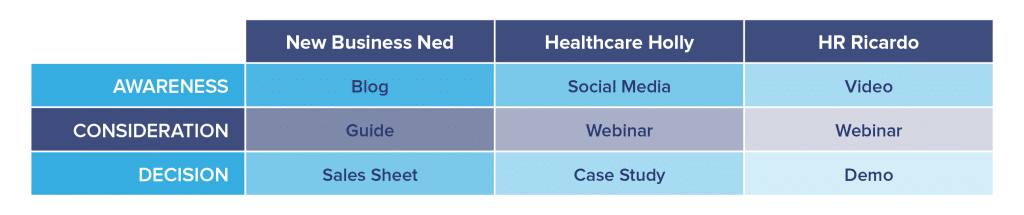
Blogs, webinars, and newsletters include information that helps solve some of your customer persona’s most common pain points. These are great for attracting your ideal customer persona to your business’s website.

An ebook that guides a prospect through a complicated industry-wide pain point proves to the prospect that your company is a true authority and partner.  Even your “closer” content — case studies, sales sheets, presentations — can all be tailored to speak directly to your ideal persona.

You can make sure you’re providing the right content at the right time for the right persona by creating an audience persona matrix. Here’s an example:

Customer Personas for Increased Client Retention

When, where, and how you share your content is also an important factor to successful marketing. A customer persona can show you how your average client prefers to receive marketing content, what time they prefer to receive it, and even how often they like to receive it. This timely flow of content and follow up with potential clients can improve the nurturing process for your sales team which in the end, leads to more sales.

Once you have mastered the art of creating customer personas, service providers can add value to client relationships by providing similar data sets. By providing customers with valuable data, you will satisfy their needs for better customer understanding. Just as customer personas will improve your marketing tactics for your business, they will also improve the marketing services you perform for your clients.

By understanding the type of customer that is most valuable to your client’s business, any type of marketing strategy you perform will now have extra information to better its performance. Blog creation, social media marketing, and other types of content creation for a client will stand out even more, now that you have information on what typical customers want to see.

Data is the resource for creating a customer persona masterpiece. The more resource you have, the better the creation. If you’re interested in offering a service to your clients that pulls in more data for them, consider offering a WiFi analytics solution. GoZone’s partners have access to valuable marketing data to offer their clients – driving revenue, retention, and better relationships.
Coupons

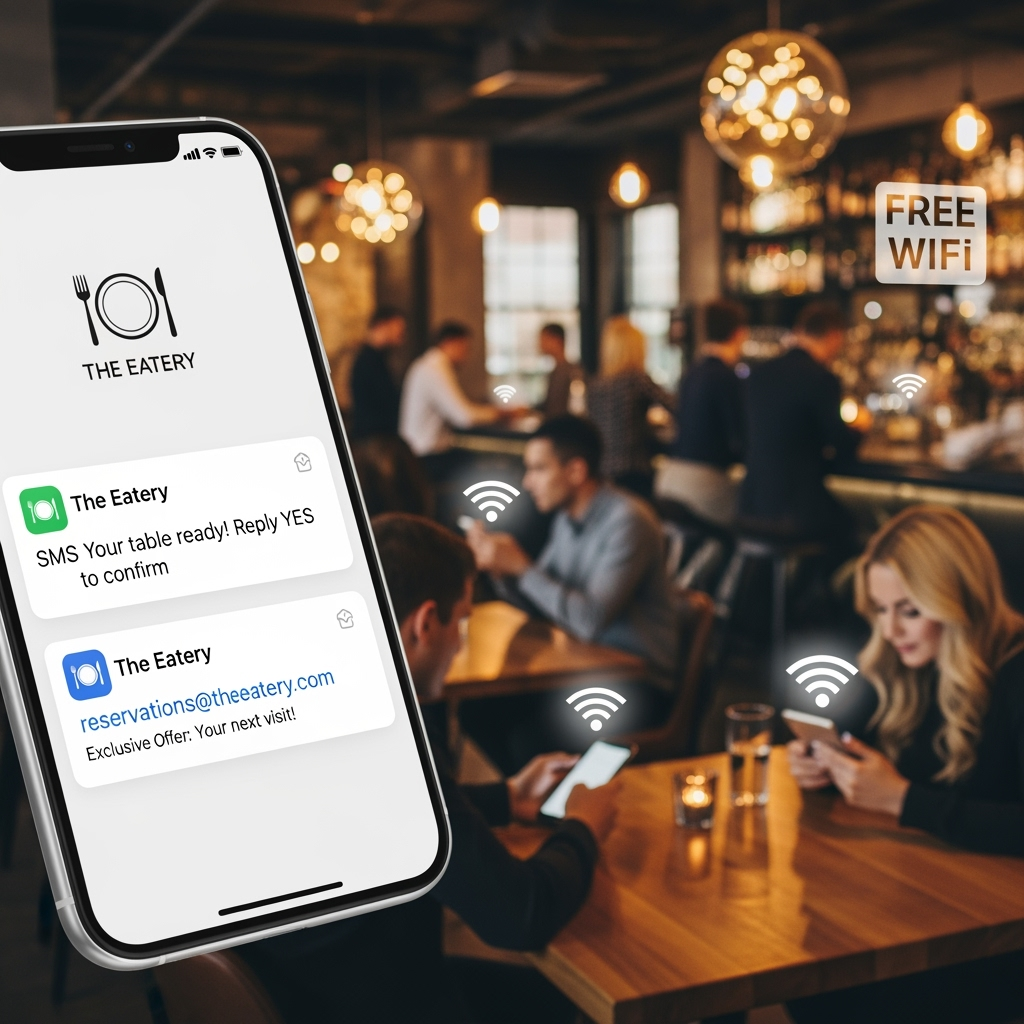
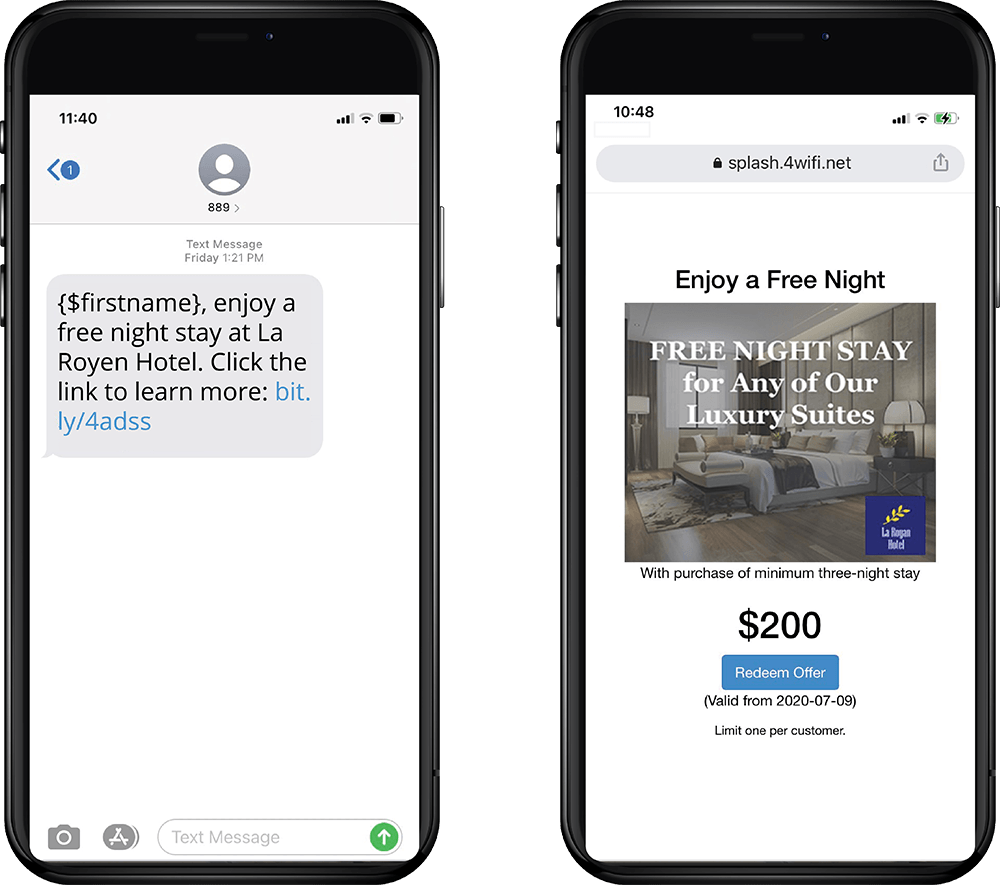
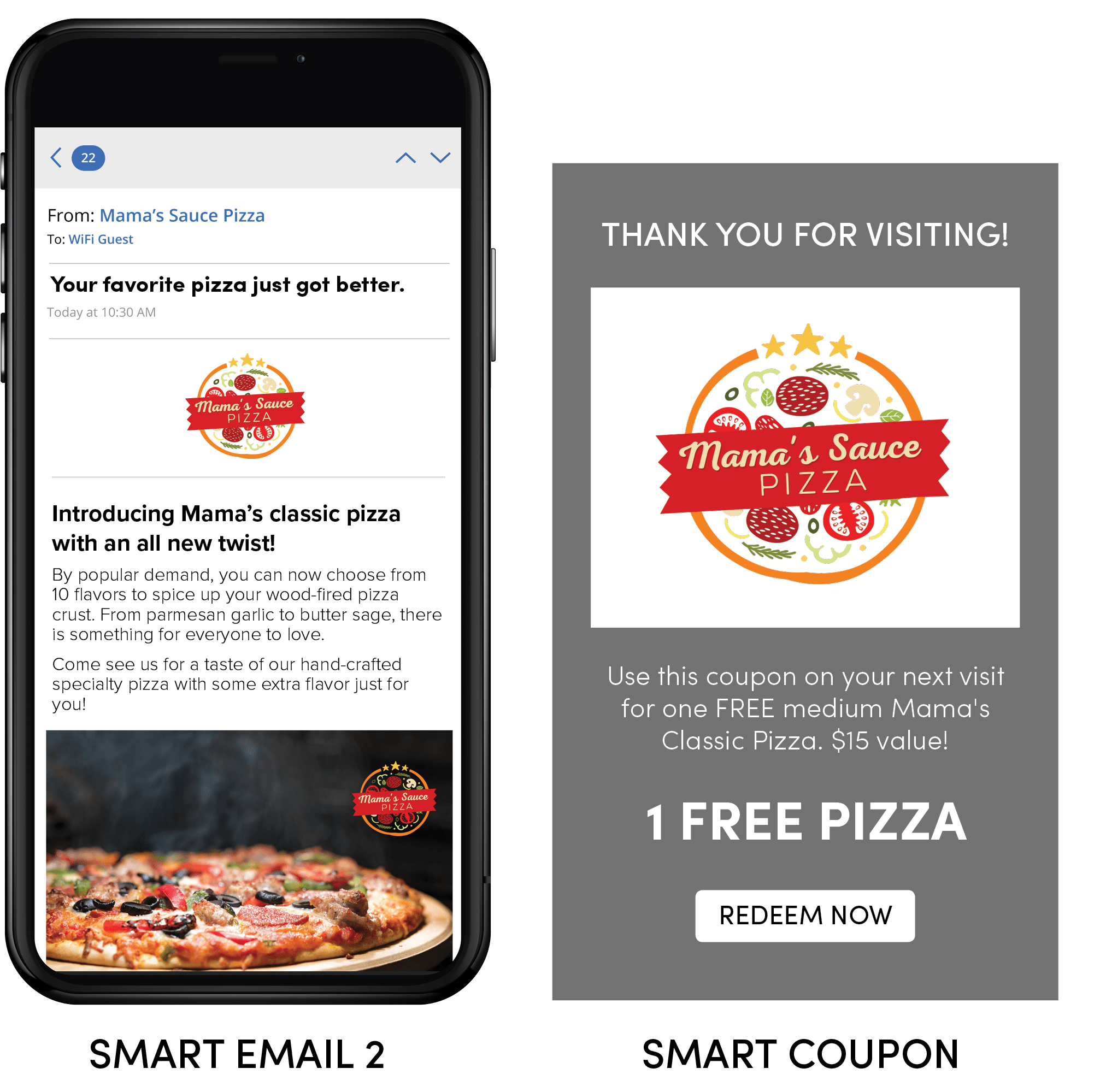
Unlock new revenue streams with Smart WiFi’s automated coupon campaigns—create unlimited, customized offers that are instantly delivered to your guests via email or SMS when they connect to your WiFi. Effortlessly boost engagement and drive repeat business, while tracking every redemption to see real results for your venue.

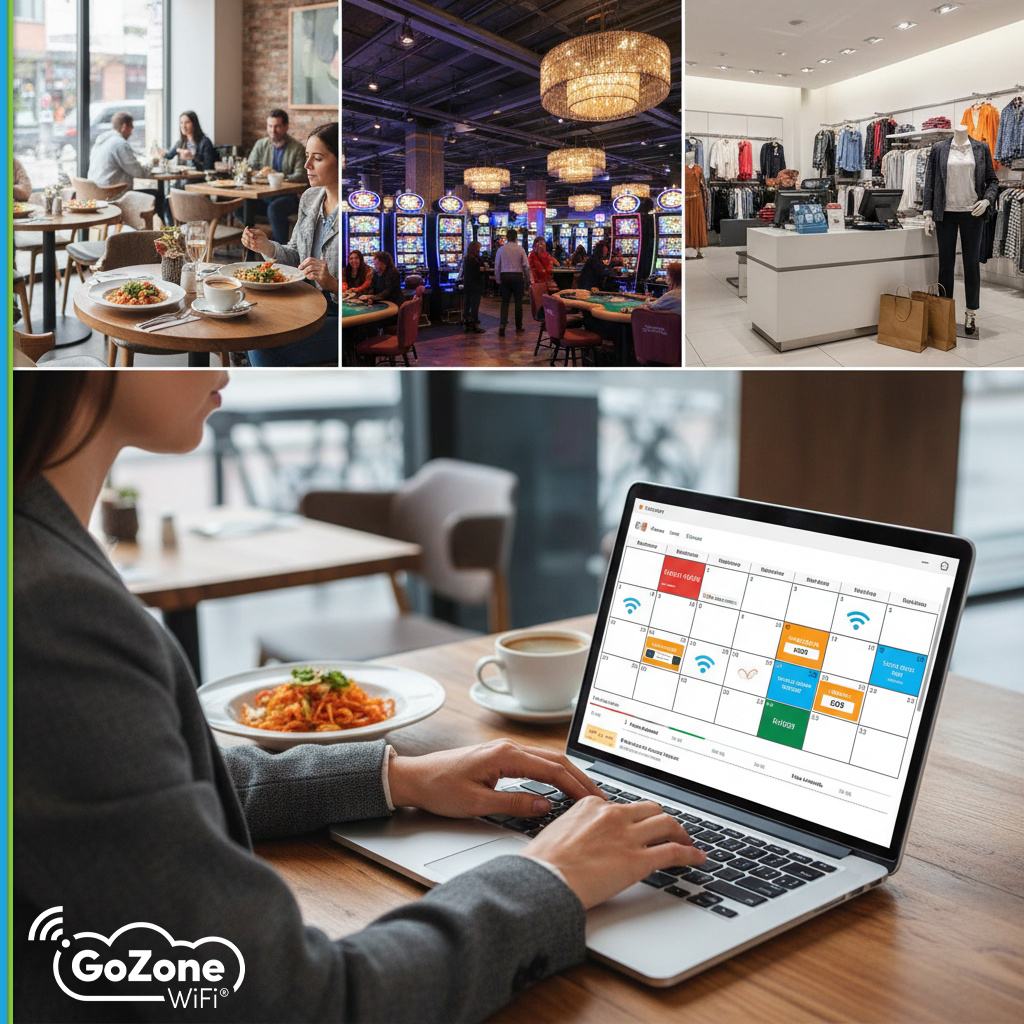
Splash Page Scheduler

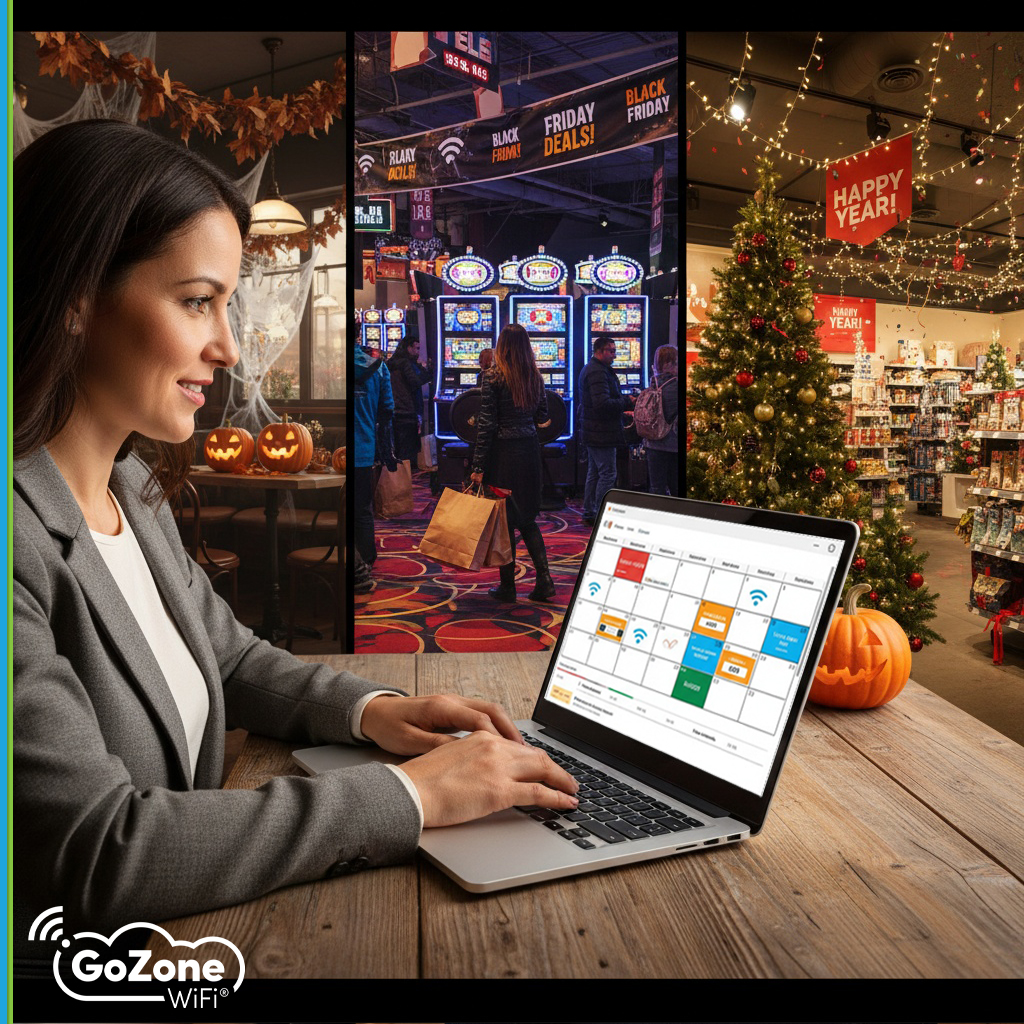
Take control of your guest experience with our Splash Page Scheduler! Effortlessly plan and customize splash pages for any day or special event—whether it’s a weekly promotion or a one-time announcement. With flexible scheduling, you’ll always deliver the perfect message to your guests, exactly when it matters most.

How Does OpenRoaming Work?

OpenRoaming is a groundbreaking framework designed to provide seamless and secure Wi-Fi connectivity across multiple networks without the need for users to repeatedly log in or manage credentials. This simplifies user experiences while enhancing security and interoperability. Here’s how OpenRoaming operates:

  1. Automatic Device Authentication: OpenRoaming enables devices to automatically authenticate to participating networks using trusted identity providers, such as service providers, educational institutions, or enterprise systems.
  2. Federated Trust Framework: It leverages a global federation of identity providers and access networks. This ensures secure communication between the user’s device and the Wi-Fi network, allowing for trusted and seamless connections.
  3. Encryption and Security: OpenRoaming employs advanced encryption protocols to ensure secure data transmission and user privacy.
  4. Seamless Handover: When moving between participating networks, OpenRoaming allows for uninterrupted connectivity without requiring users to re-authenticate or reconnect manually.
  5. Standardized Deployment: Networks participating in OpenRoaming adopt a consistent framework, ensuring compatibility and ease of deployment across diverse environments.

Advantages of OpenRoaming

  • Effortless Connectivity: OpenRoaming eliminates the need for repeated logins or managing passwords, delivering a frictionless experience for users.
  • Improved Security: By using identity federation and encryption, OpenRoaming ensures user data is secure, reducing risks associated with public Wi-Fi networks.
  • Global Interoperability: OpenRoaming’s federated framework allows users to connect seamlessly across a vast ecosystem of participating networks, enhancing mobility and convenience.
  • Enhanced User Retention: Businesses benefit from providing an uninterrupted user experience, encouraging longer visits and repeat engagements.

Challenges with OpenRoaming

  • Initial Setup Requirements: Participating networks must implement the OpenRoaming framework, which may involve technical setup and coordination with identity providers.
  • Network Participation: OpenRoaming’s effectiveness depends on widespread adoption by networks and identity providers, limiting availability in areas where participation is low.
  • Compliance and Maintenance: Ensuring compliance with OpenRoaming standards and maintaining infrastructure can require ongoing effort and investment.

OpenRoaming for Businesses

 Businesses that adopt OpenRoaming, which allows guests to connect automatically, gain a competitive advantage by providing a secure and effortless Wi-Fi experience for customers. From improving customer satisfaction to creating opportunities for engagement and loyalty, OpenRoaming transforms Wi-Fi connectivity into a strategic asset. By joining the OpenRoaming ecosystem, businesses can become part of a global network that keeps users connected wherever they go.

How Does CAPPORT Work?

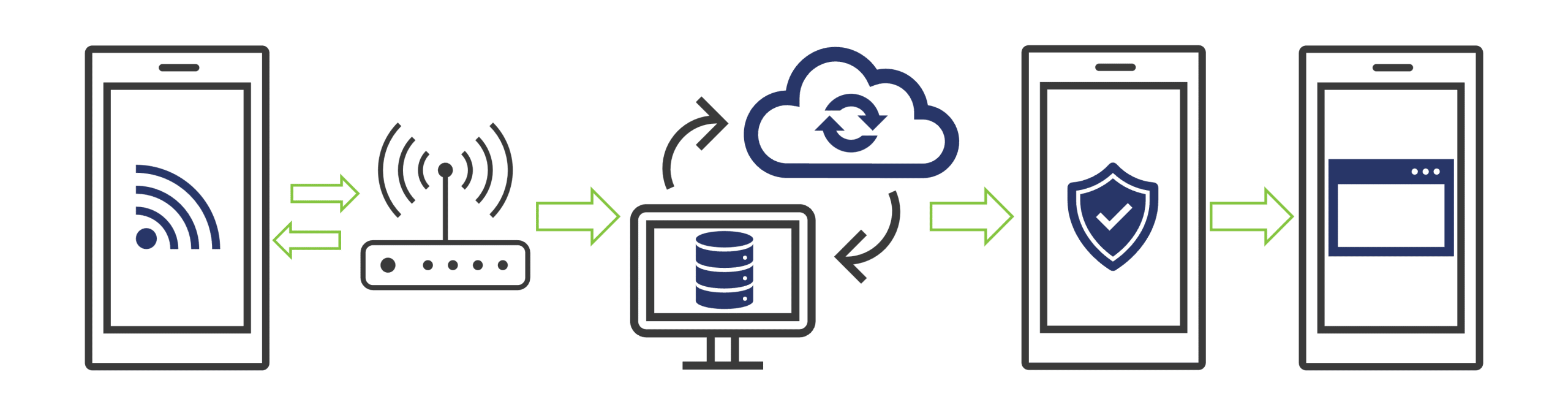
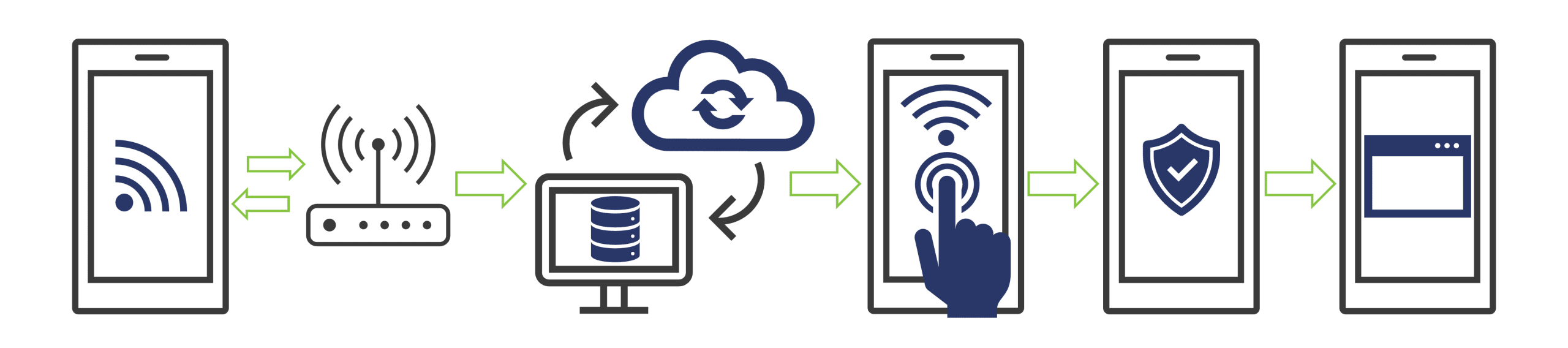
CAPPORT (Captive Portal API) streamlines the process of connecting users to Wi-Fi networks by creating a seamless and user-friendly experience. When a user accesses a CAPPORT-enabled network, they are guided through an efficient flow for authentication and internet access:

  1. Connection Initiation: The user’s device requests internet access when attempting to connect to the network.
  2. DHCP and CAPPORT State Interaction:
    • The device communicates with the DHCP server to obtain an IP address.
    • Along with the IP, the DHCP server provides a URL to the CAPPORT State endpoint.
    • The device queries the endpoint to determine whether it needs redirection to a captive portal.
  3. Captive Portal Engagement: If required, the user is redirected to the portal, where they can complete actions such as accepting terms, entering login credentials, or providing other validation.
  4. Authentication and Access: Upon successful validation, the network grants the user internet access, and redirection ceases for the duration of the session.
  5. Browsing and Session Extension: Users can browse without interruption. CAPPORT also supports seamless session extensions, allowing users to extend their session without re-authentication.


This standardized process ensures a smooth connection and consistent user experience across networks and devices..

Advantages of CAPPORT

  • Standardized Connectivity: CAPPORT ensures uniform communication protocols, delivering consistent network behavior and enhancing the user experience.
  • Improved Browsing Experience: Avoids common HTTPS redirection issues, reducing errors and streamlining the login process.
  • Seamless Session Management: Enables session extensions without re-login, ensuring uninterrupted connectivity for users.

Challenges with CAPPORT

  • Implementation Complexity: Setting up CAPPORT requires a robust network infrastructure, which may challenge businesses lacking technical expertise.
  • Local DHCP Server Requirement: CAPPORT relies on a local DHCP server with an API, necessitating specific configurations and potential cost considerations.
  • Device Compatibility: As of 2023, CAPPORT support is not universal, limiting functionality on some devices.

By addressing these challenges, businesses can leverage CAPPORT to enhance connectivity, improve user experiences, and create opportunities for Wi-Fi monetization and marketing.

Talk to an Expert


Smart WiFi Suite Enterprise Feature Matrix

  • Enterprise-grade cloud infrastructure
    Scaleable platforms on the Amazon AWS cloud provides carrier-grade uptime.
  • Multi-Location Data Views
    An aggregated view of your data giving you visibility to all of your locations or drill-down to specific locations.
  • User Access Control
    Allows your administrator to control and limit access, features and data visibility among users.
  • Advanced Captive Portal Engine
    A complete toolset to design and build dynamic captive portals, guest flows and custom privacy controls. Includes our Touchless Menu features.
  • Guest Forms, Vouchers and Payments
    Collect guest data, surveys, on-line or offline payments and offer different access levels.
  • Customized login methods
    Choose how guests are able to access your network including social login, emails and SMS login, advertisements or a combination.
  • Data Export
    Full guest profile export to CSV allowing you to use collected data in third party systems.
  • Detailed Location Data Analytics
    Analyse detailed information about your locations like busy days, busy times and location comparisons.
  • Demographics and Device Information
    Make informed decisions based on detailed demographics and perform location comparisons.
  • Data Sync to other systems/API
    Save time populating other systems as guest profile data can be sent to external systems on timed intervals.
  • Triggered Campaigns
    Engage with your guests without the manual work by creating personalized email, SMS or Twitter campaigns.
  • Coupons and Loyalty
    Increase spend and promote repeat visits by creating incentives for guests or their friends to come back.
  • Import external data
    Bring in contact data from other systems to consolidate your marketing efforts into a single comprehensive platform.
  • Contact segmenting and lists
    Build contact groups to send personalized messages to your guests based on automatic segmentation and your own critera.
  • Scheduled Campaigns
    Communicate with your contacts to drive awareness through email, SMS or Twitter.
  • Traffic Counts and Statistics
    Monitor your venue and events with real-time and recorded traffic counts and patterning.
  • Heatmapping and Traffic Flows
    Visualize crowd density and how people flow in, out and through your venue to see where people congegrate.
  • Alerting and Reporting
    Create automated alerts to help control crowds or to monitor abnormal trends.
  • Intelligent Landing Page Builder
    Simple to create pages that support multiple campaign types and can easily be modified and re-purposed for other venues or events.
  • Campaign Management Tools
    Offer your advertisers options to suit their advertising needs such as A/B testing, ad weights, flexible scheduling and more.
  • Reporting and Attribution
    Analyse detailed information about the campaigns and creatives to get the best campaign targeting.

  • Access


  • Insights


  • Automation


  • Contacts


  • Presence


  • Advertising

You should receive a text shortly with a link to view a sample Guest Flow.

Take a look at the sample we just sent you, and feel free to reach out if you’d like to learn more.

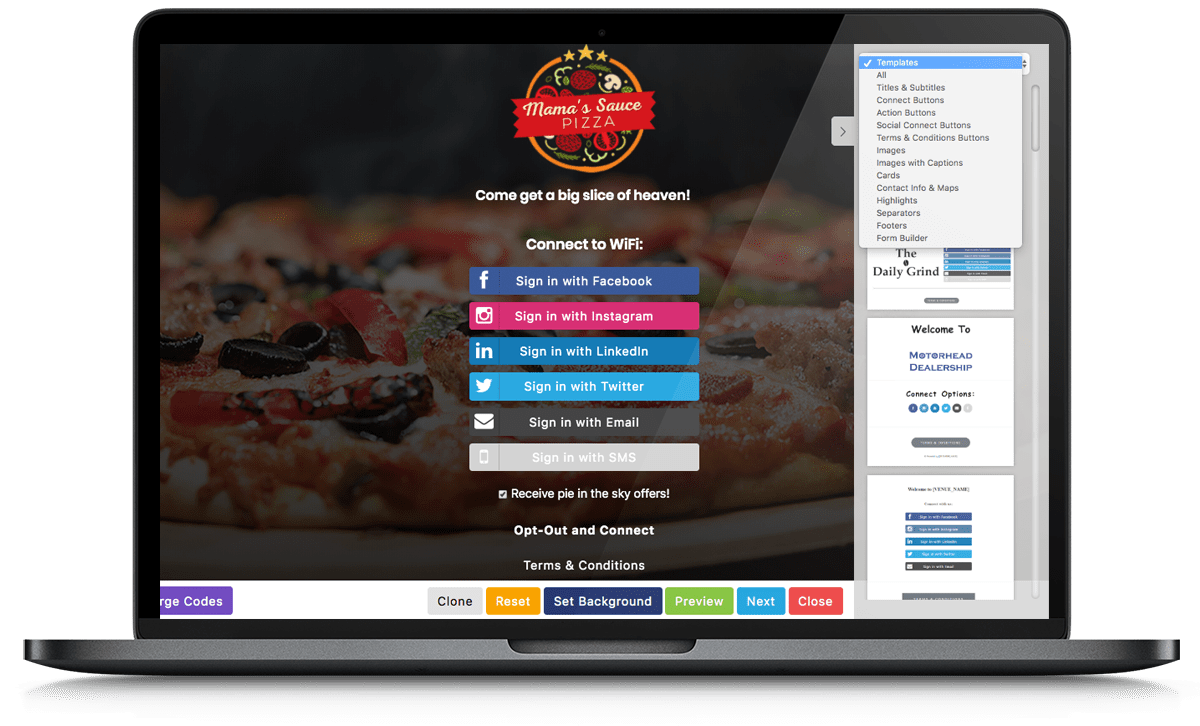
Custom Splash Page Builder

A custom splash page helps give a captive portal the branded look it needs to stand out from the crowd and give guests the peace of mind they’re accessing the network associated with the venue they’re visiting.

WiFi Payments and Vouchers

Offer premium guest WiFi access and promote WiFi upgrades with comprehensive payment and voucher modules. Payments can be used to offer guests varying speeds of WiFi access, while vouchers are great for venues that want to utilize a captive portal that also requires a voucher code for WiFi access.
WiFi payments and vouchers

Guest Plans

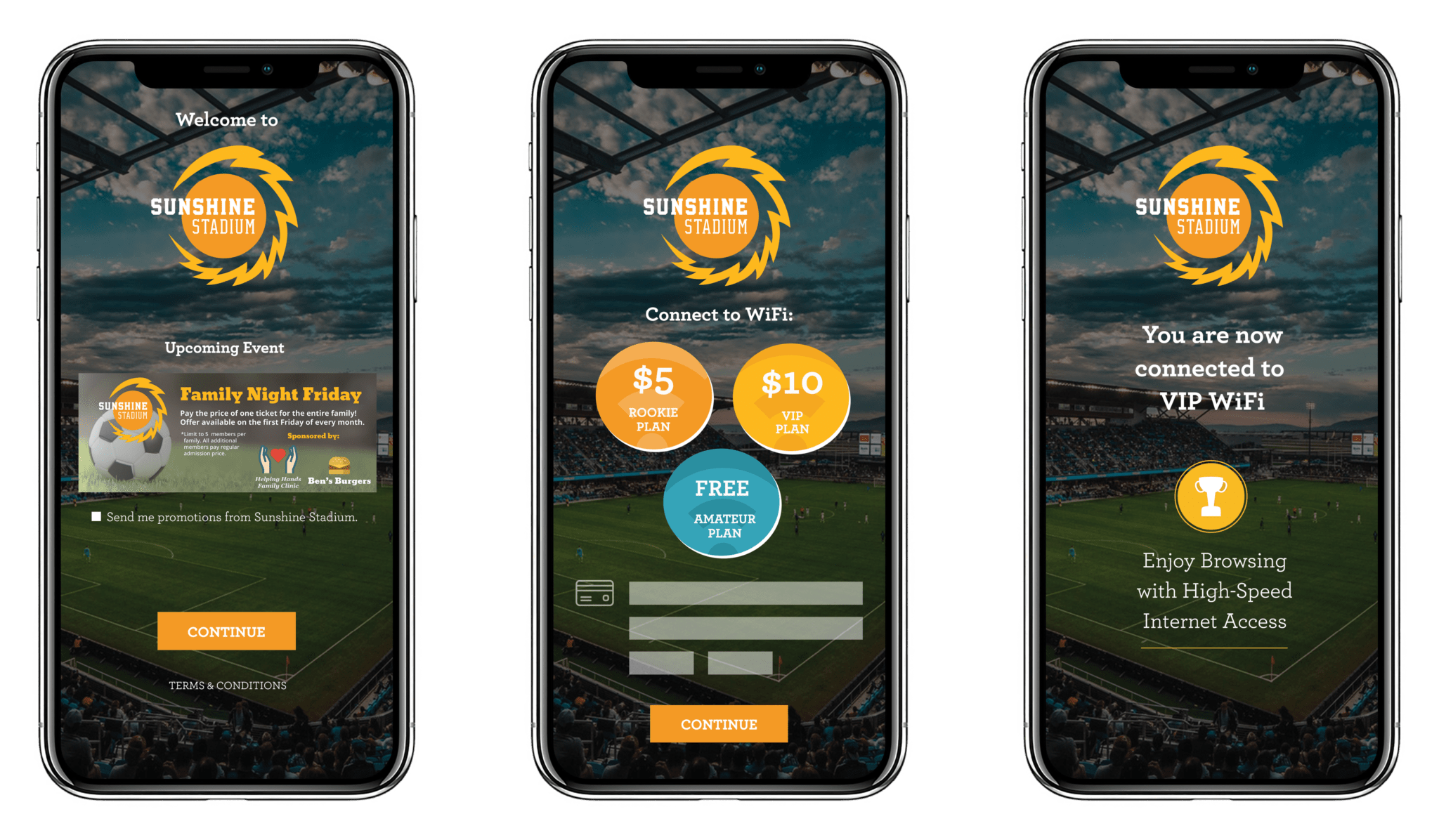
Venues can now offer multiple levels of guest WiFi access with our Guest Plan feature. Guest Plans are defined by specific upload and download speeds and session time limits. Brick-and-mortar businesses can offer guest WiFi access and promote WiFi upgrades with our new payment and voucher modules.

Versatile Form Builder

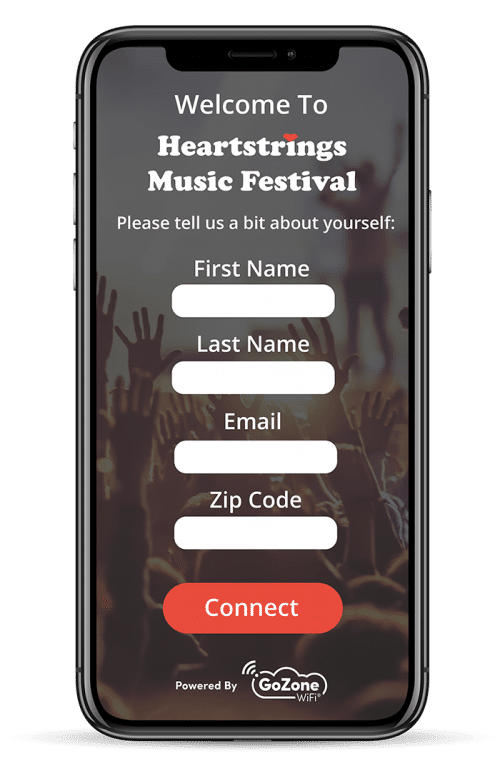
Create and display custom guest surveys on any splash page of your guest flow. Collect feedback and gather additional data points to create smarter marketing.

Enhanced Guest Flow

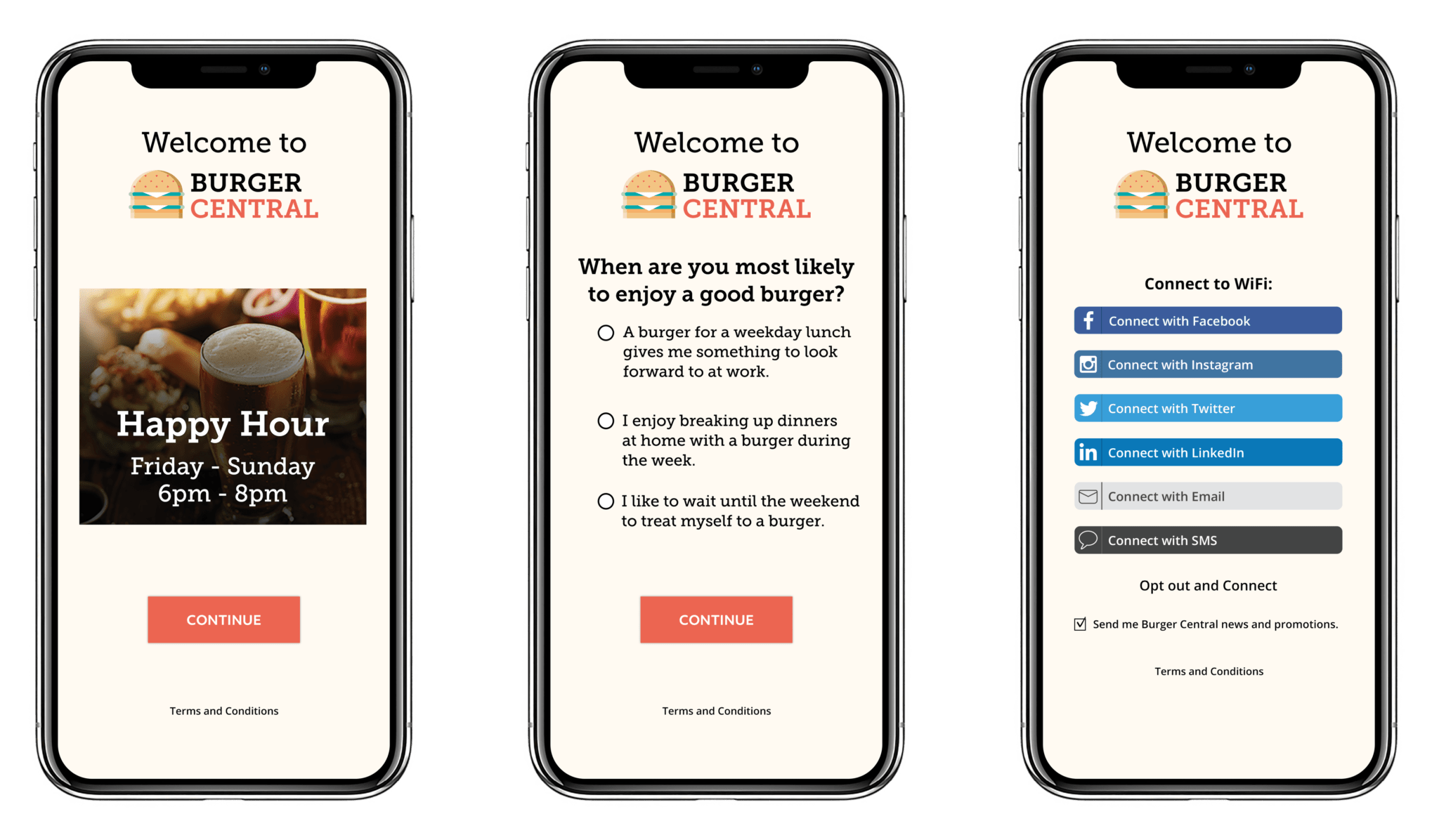
Guest flow gives venues complete control over the guest WiFi experience. Guest flows help keep a visually pleasing captive portal experience by preventing clutter of multiple marketing assets. Keep it simple, or turn your WiFi into a digital billboard.
WiFi splash page with survey social login

Integrated Ad Spaces

Ad Space Integrations is a powerful feature for venues who want to promote products, deals and specials, online shopping, loyalty programs and other signups, or third-party advertisers all on a pre-authenticated Splash Page.

Increase impressions and clicks for advertising opportunities by showcasing AdSpaces before requiring a guest to connect to WiFi.

Have an app that needs more downloads? The URL redirect function will navigate guests to the app store specific to their device as soon as they click on the advertisement/call-to-action button.

No more will guests have to wait to connect to WiFi to reach interactive ads. Ad Space Integrations takes Ads4WiFi smart advertising tools and places it our smart marketing environment powered by Marketing4WiFi.

Hotspot Scheduler

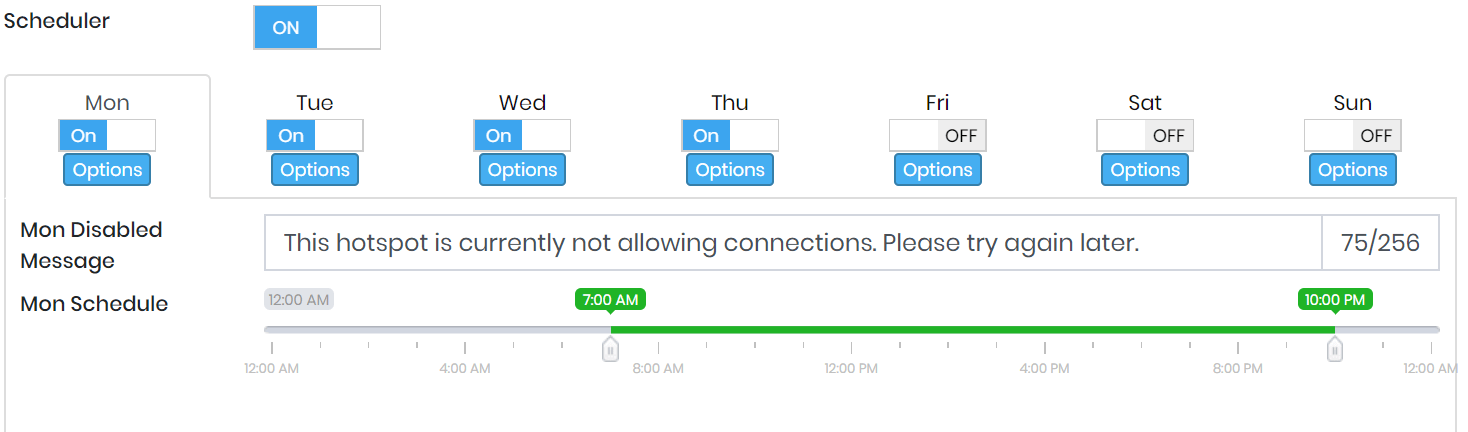
Determine the specific days and times that WiFi is available to guests. Hotspot Scheduler offers smarter WiFi control by allowing venues to run their guest WiFi during business hours.